

#NaPoWriMo
🤰💜🤱🌻💛🐝🤰💜🤱🌻💛🐝
22/04/2021 – DAY 22
🤰💜🤱🌻💛🐝🤰💜🤱🌻💛🐝
Afternoon Tea - Terza Rima

From the aristocracy up to the Queen,
They take the refreshment of afternoon tea.
Teapots, afternoon blend, lemon tea or cream.

A delicate vase holds a spray of sweet pea.
Silver teaspoon stirs teacup made of china.
Moves fragrant petals of Lapsang Suchong tea.

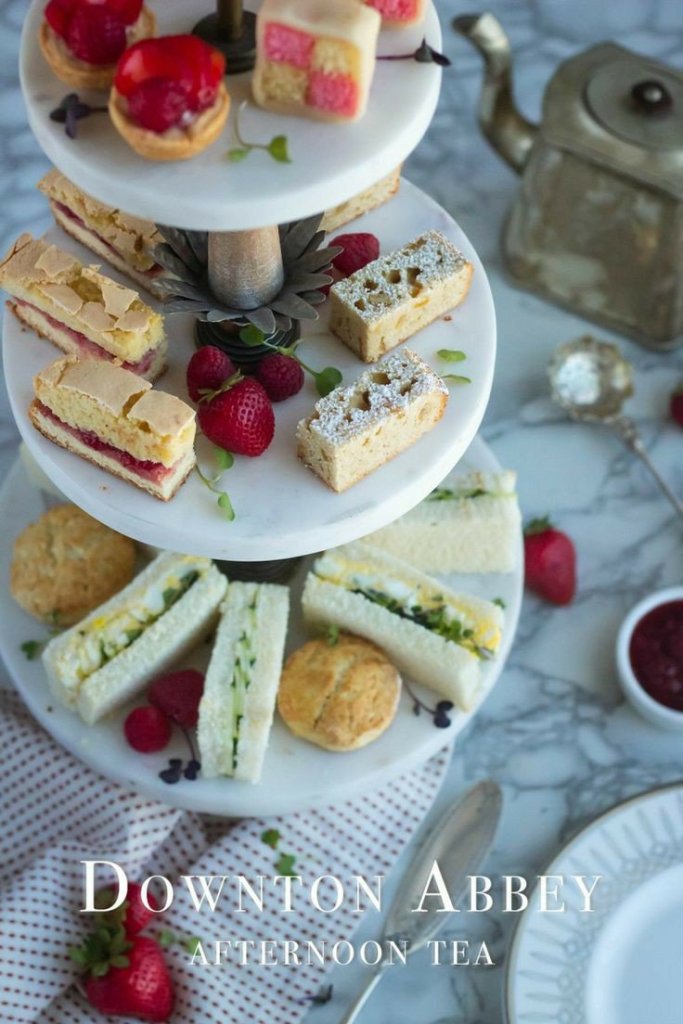
Food is plentiful on cake stands, none finer.
Sandwiches cut in triangles, cake fingers.
Pork pie, scone with cream and jam, fit for Regina.

Thin biscuits made with lemon or ginger.
Food is eaten, tea taken, conversation,
Is quiet, we sit back, taste on tongue still
lingers.

Good things end;  we leave with appreciation.
We have enjoyed eating our delicious tea.
Tomorrow afternoon brings consolation.

©🦊VixenOfVerse, 2021.
🤰💜🤱🌻💛🐝🤰💜🤱🌻💛🐝
🤰💜🤱🌻💛🐝🤰💜🤱🌻💛🐝
In a prompt originally posted this past February, Poets & Writers directs us to an essay by Urvi Kumbhat on the use of mangoes in diasporic literature. As she discusses in her essay, mangoes have become a sort of shorthand or symbol that writers use to invoke an entire culture, country, or way of life. This has the beauty of simplicity – but also the problems of simplicity, in that you really can’t sum up a culture in a single image or item, and you risk cliché if you try.
But at the same time, the “staying power” of the mango underscores the strength of metonymy in poetry. Following Poets & Writers’ prompt, today I’d like to challenge you to write a poem that invokes a specific object as a symbol of a particular time, era, or place.
Happy writing! http://www.napowrimo.net
🤰💜🤱🌻💛🐝🤰💜🤱🌻💛🐝
 VIXEN of VERSE
You must be logged in to post a comment.