

#napowrimo #poetry
And now for our (optional) prompt! Sergio Raimondi’s poem, “Today Matsuo Basho Cooks,” plays on the following haiku by (you guessed it), Matsuo Basho:

Crimson pepper pod!
Add two pairs of wings, and look—
darting dragonfly.

For today’s challenge, write a poem in which you respond to a favorite poem by another poet.

Happy writing!

I chose the poem 'Remembrance' by Emily Brontë because it sums up grief perfectly.

EMILY

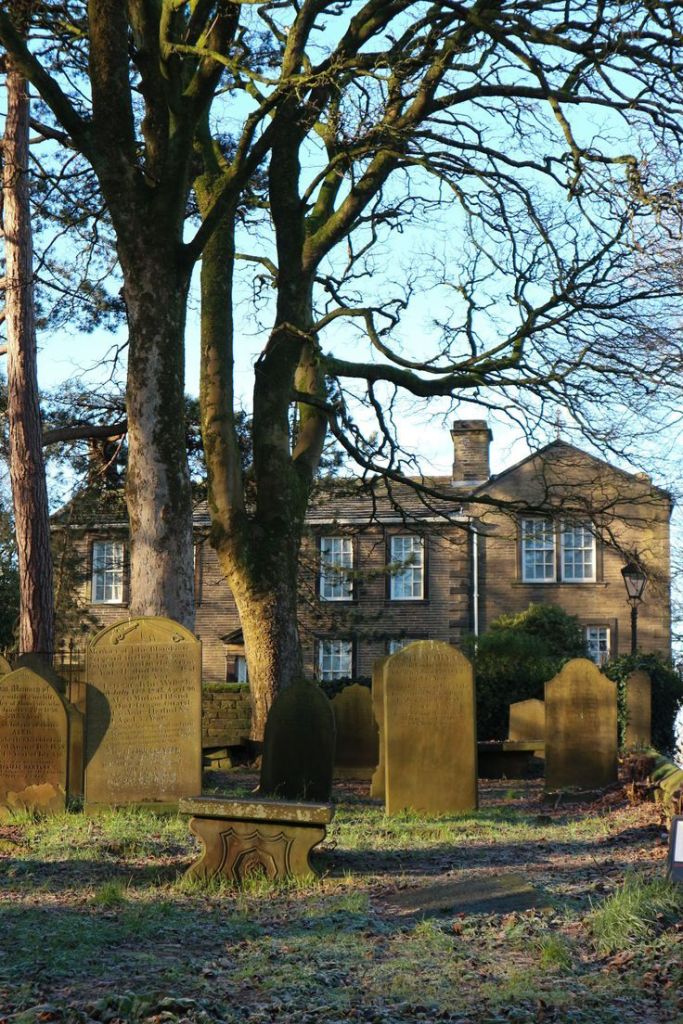
Victorian women were not meant to write,
Words of such raw and earthy passion as she.
Emily wrote what she saw in outer and inner sight.
As a child she grew up in the miaisma of grief.

The loss of her mother and two older sisters,
Ingrained in her austere growing up in a
parsonage,
Next to the wild moors brought words that blister
With the rawest of emotions — cruelest
grief.

Living with a father in mourning, she turned
To her brother and sisters to invent their own world;
Gondal where battles were fought and passion burned,
Love was given and lost and only grief remained.

Emily never married or as far as we know
Had a lover, she stayed close to home shunning
The company of strangers, writing by the fireside's glow.
Happy to be with her family and to walk
the Yorkshire moors.

She sets her poem in the depths of winter's cold,
Snow is on the ground and the poet talks,
Of the bleakness of the grave — a severance that is old.
She uses the metaphor of flight for her inner journey.

Fifteen wild Decembers have passed for her grief
And speak of years of change and suffering,
Is her isolated inner life, stealing like a thief
Her joy, to be found in a healthy outer life?

Emily's talk of the grave and the tomb
that is already
Hers, her grief reaches depths that are palpable.
As though she is in old age and therefore, ready
To die and join her imagined lost lover.

Emily died three months after her beloved brother
Branwell, a talented but alcoholic and drug addicted
Tortured soul; was that on whom she based this lover,
That, as far as we know, never even existed?

Emily was a woman of her restrictive Victorian age,
With her love of nature and her wild Yorkshire moors.
Yet, despite her isolation she observed the rage,
The cruelty, the despair, passion and love she saw.

©🦊VixenOfVerse, 2026

Remembrance

By Emily Brontë

Cold in the earth—and the deep snow piled above thee,
Far, far removed, cold in the dreary grave!
Have I forgot, my only Love, to love thee,
Severed at last by Time's all-severing wave?

Now, when alone, do my thoughts no longer hover
Over the mountains, on that northern shore,
Resting their wings where heath and fern-leaves cover
Thy noble heart forever, ever more?

Cold in the earth—and fifteen wild Decembers,
From those brown hills, have melted into spring:
Faithful, indeed, is the spirit that remembers
After such years of change and suffering!

Sweet Love of youth, forgive, if I forget thee,
While the world's tide is bearing me along;
Other desires and other hopes beset me,
Hopes which obscure, but cannot do thee wrong!

No later light has lightened up my heaven,
No second morn has ever shone for me;
All my life's bliss from thy dear life was given,
All my life's bliss is in the grave with thee.

But, when the days of golden dreams had perished,
And even Despair was powerless to destroy,
Then did I learn how existence could be cherished,
Strengthened, and fed without the aid of joy.

Then did I check the tears of useless passion—
Weaned my young soul from yearning after thine;
Sternly denied its burning wish to hasten
Down to that tomb already more than mine.

And, even yet, I dare not let it languish,
Dare not indulge in memory's rapturous pain;
Once drinking deep of that divinest anguish,
How could I seek the empty world again?


Source: Norton Anthology of Poetry (W. W. Norton and Company Inc., 2005)


You must be logged in to post a comment.